
The electrical cost of gasoline is 8.6kWh

A friend of mine did an interesting bit of research and data gathering that I’ve not seen elsewhere and I thought I’d share here.

If you read about energy and markets, you might have read about EROEI: Energy return on energy invested. E.g: It might take 20 gallons of oil to extract a 55g barrel of oil.

So what’s the energy cost to refine a gallon of gasoline?

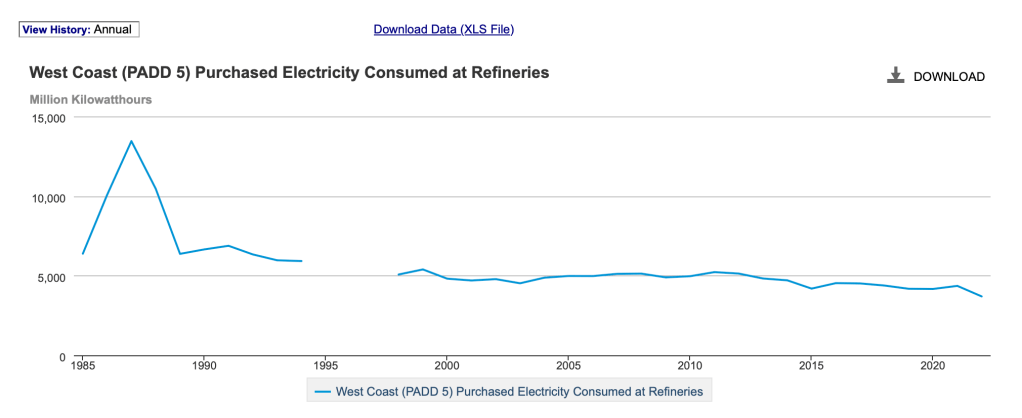
To get an answer, my friend found the government page showing the energy used by “Petroleum Administrative for Defense District 5. Basically, west-coast refineries.”. It’s here. A snapshot graph:
Next, you need to know how much they refined (oil in, gasoline etc out). That’s here. And the refining capacity is here.

If you do the math (to tip my hat to a scientist I admire), the result is 8.6kWh/gallon. To get that number, you

  • take the annual electricity purchased by the refinery (X)
  • Calculate the proportion of gasoline vs total refined output (Y) (19.45 gallons gas per 44.77 gallons refined output)
  • Divide X/Y

That’s more than I would have guessed. Our 2018 Chevrolet Bolt EV holds about 60kWh and can drive around 180 miles, by way of comparison. So the refining energy could power an average EV sedan 34 miles. Which is higher than the average EPA mileage of a comparable ICE sedan.

Food for thought. As my friend put it, “charging an EV will always require less energy than an equivalent gasoline powered vehicle, and would always be cheaper for the end user if not for subsidies to the petroleum industry.”
California’s wildfire blackouts are a mess. Here are 3 key solutions. – Vox

This is a very good post about the current mess here in California where PG&E shut off power for 800,000 people to cover its ass and avoid starting another fire. It sounds as if my local utility, SDG&E, actually got its shit together after starting a fire in 2007 and being forced to actually pay for it:

n 2007, San Diego Gas & Electric (SDG&E) was blamed for wildfires in San Diego County; investigators found it hadn’t done proper vegetation management. It ultimately paid $2.4 billion to settle lawsuits related to those fires. It wanted to pass on remaining costs, some $379 million, to ratepayers in the form of higher rates, but the California Public Utility Commission (CPUC) wouldn’t let it. The case was appealed all the way up to the California Supreme Court, which found against SDG&E. Earlier this month, the US Supreme Court announced that it would not take the case, leaving SDG&E to eat the costs. (This ruling is relevant to how PG&E’s liability will ultimately be divided up.)

Vox

Since 2007, the scare of those lawsuits has prompted SDG&E to spend $1.5 billion upgrading its fire detection and response capabilities. And in its recently announced wildfire mitigation plan, it proposes spending $3 million more on such measures as aggressive grid hardening and vegetation management, improved meteorology with more weather stations, more remote, high-definition cameras for fire-detection, a multi-level community outreach and education program, and a series of community resource centers where people can go when power is shut off to receive information and basic needs.

Vox

The other state trend driving this is housing prices – for years, ‘drive till you qualify‘ was received wisdom for years. The result, combined with the desire for a yard, was sprawl. Sprawl + climate change = burning homes.

Anyway, the Vox piece does an excellent job of laying out the utility and fire side of the story – have a read.

Critical mass

Social change follows a critical mass pattern where something is adopted slowly then quite rapidly. Case in point today: residential solar power. Today my adjacent neighbors are all installed. I’m really jealous of this:

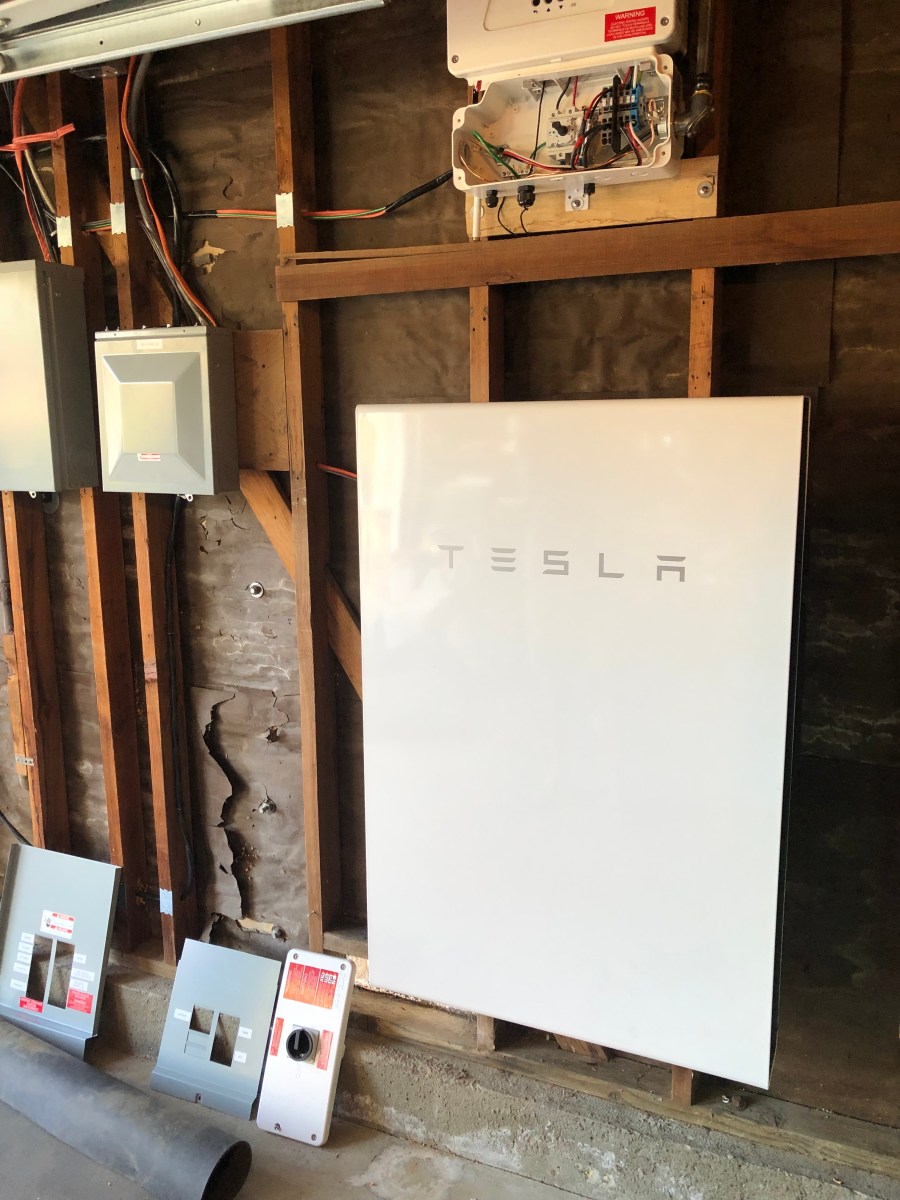
13.5kWh. So gorgeous. Now to convince my better half.

Tesla powerwalls combined with solar panels is a really elegant solution. About $8,000 per battery today though.